


Quality Control from the Source: Key Indicators and Practical Methods for Tarpaulin Product Inspection
1. Raw Material Quality
The quality of the finished tarpaulin largely depends on the quality of its raw materials.
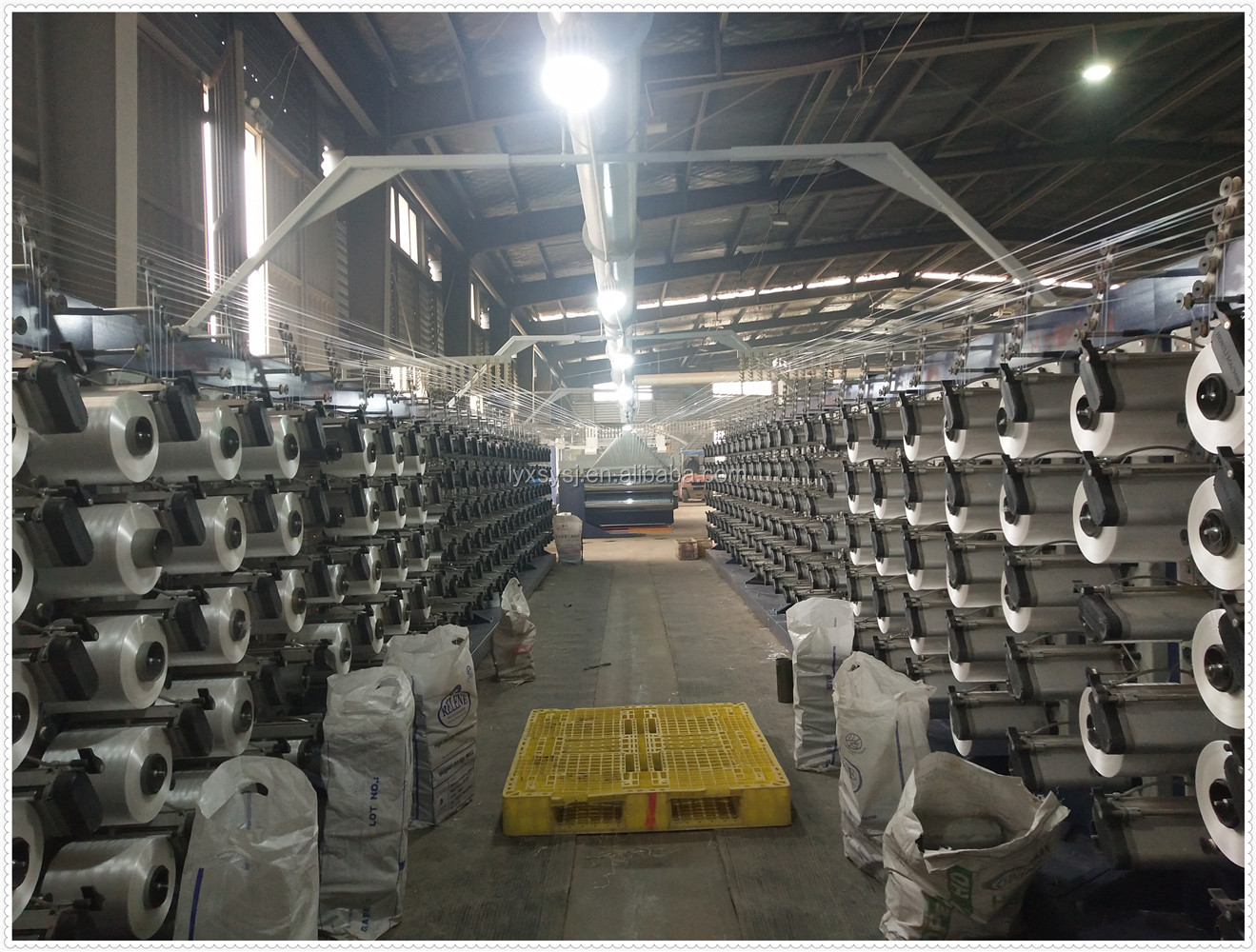
For PE tarpaulin, the main factors include the quality of polyethylene raw materials, woven fabric, coating materials, and additives. For PVC tarpaulin, PVC resin, plasticizers, stabilizers, pigments, and other components can significantly affect the final product.
When purchasing raw materials, manufacturers should check:
- Material type and composition
- Virgin or recycled material ratio
- Material uniformity
- Color consistency
- Moisture and contamination
- Raw material supplier stability
Consistent raw materials help maintain stable mechanical strength, waterproof performance, color, and flexibility from batch to batch.
2. Weight and GSM Inspection
Weight is one of the most practical indicators for checking tarpaulin consistency.
Depending on the product, buyers may specify the product by total weight, GSM (grams per square meter), thickness, or a combination of these specifications.
A simple inspection method is to measure a representative piece of tarpaulin and calculate its weight per square meter:
GSM = Product Weight ÷ Product Area
For example, if a 2-square-meter sample weighs 1.2 kg, its GSM is approximately 600 g/m².
However, weight alone does not determine quality. Two products with similar GSM can have different performance because of differences in yarn strength, weaving density, coating formulation, and manufacturing processes.
Therefore, GSM should be used together with other quality indicators.
3. Tensile Strength
Tensile strength measures how much pulling force a tarpaulin can withstand before breaking.
This is particularly important for truck covers, construction covers, industrial tarpaulin, and other heavy-duty applications where the material may experience strong tension during installation and use.
Laboratory tensile testing can provide accurate results in both the warp and weft directions. Manufacturers should establish internal standards according to the product specification and application.
A stable production process should ensure that tensile strength remains within the required range across different production batches.
4. Tear Resistance
Tarpaulin can be exposed to sharp edges, strong winds, friction, and repeated handling. Therefore, tear resistance is another important quality indicator.
A product may have good tensile strength but still perform poorly if its tear resistance is low.
Tear resistance can be evaluated through standardized laboratory tests. For routine factory inspection, manufacturers can also conduct controlled sample tests to identify significant differences between batches.
For heavy-duty tarpaulin, both tensile strength and tear resistance should be considered when evaluating overall durability.
5. Waterproof Performance
Waterproofing is one of the most fundamental functions of tarpaulin.
A simple field inspection can involve placing water on the surface and checking whether water penetrates the material. However, visual inspection alone cannot replace standardized waterproof testing.
For professional quality control, manufacturers can use hydrostatic pressure or other applicable waterproof testing methods.
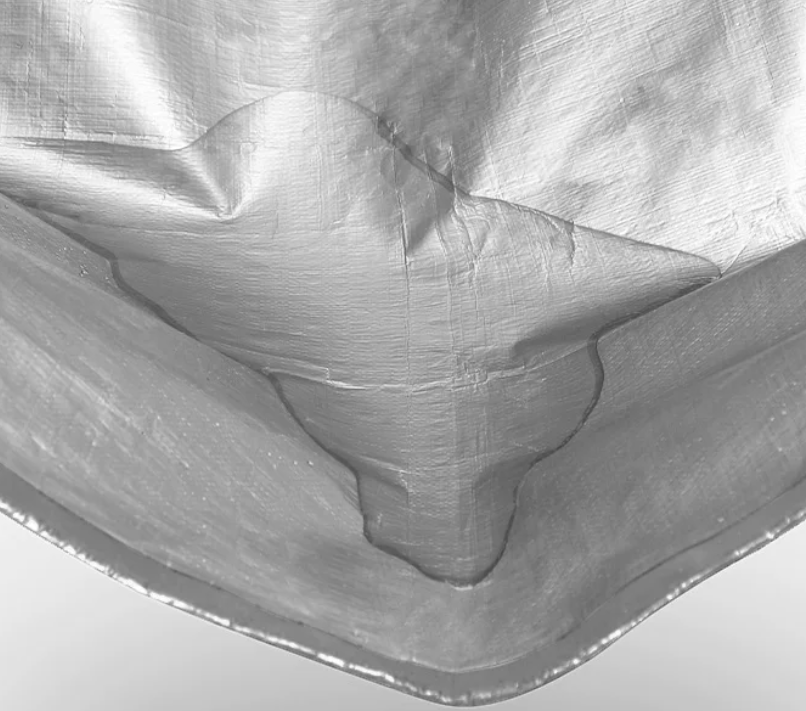
Special attention should also be paid to seams, welded areas, and eyelet locations. Even if the main fabric is completely waterproof, poor seam construction can allow water to enter.
6. UV and Weather Resistance
Outdoor tarpaulin is often exposed to sunlight, rain, temperature changes, and wind for extended periods.
UV resistance is therefore particularly important for products designed for long-term outdoor use.
UV stabilizers and appropriate coating formulations can improve weather resistance. Manufacturers may use accelerated UV aging tests to evaluate changes in color, flexibility, tensile strength, and surface condition after prolonged UV exposure.
For customers purchasing tarpaulin for outdoor storage or transportation, it is important to clarify the expected service environment and required service life before selecting the material.
7. Coating and Surface Quality
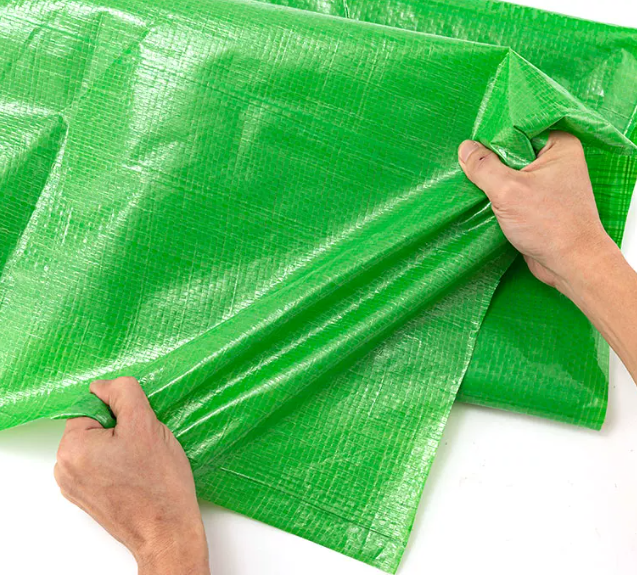
The coating should be evenly distributed across the fabric without obvious pinholes, cracks, bubbles, delamination, or inconsistent thickness.
During production, workers should regularly inspect:
- Surface smoothness
- Coating uniformity
- Color consistency
- Adhesion between fabric and coating
- Visible defects
- Edge quality
Good surface quality not only improves appearance but also contributes to waterproofing and durability.
8. Welding, Hemming, and Eyelet Inspection
The accessories and finishing processes of tarpaulin are just as important as the fabric itself.
For welded tarpaulin, welding lines should be continuous, firm, and free from obvious weak points. For hemmed products, stitching should be even and secure.
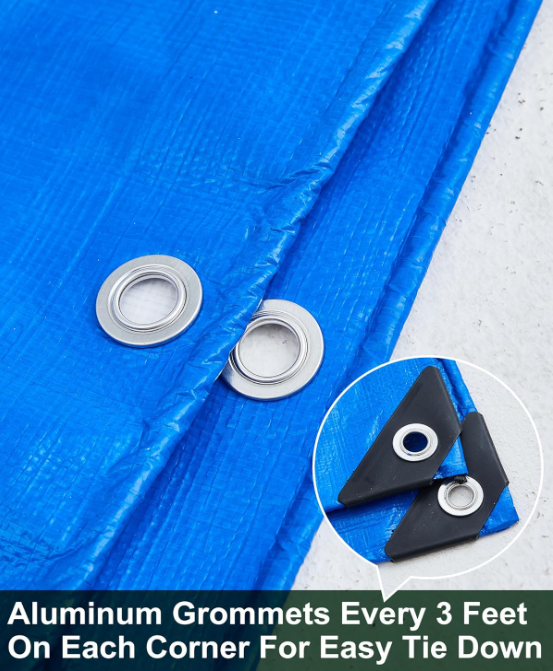
Eyelets should be correctly positioned and firmly attached. They should not easily separate from the fabric when subjected to normal pulling force.
A practical factory inspection should include random checks of seams, corners, hems, ropes, buckles, eyelets, and other accessories according to the customer's requirements.
9. Dimensional Accuracy
Length and width are basic but important specifications.
During final inspection, manufacturers should measure the finished product according to the agreed tolerance. Customers purchasing large tarpaulin covers should pay particular attention to actual finished dimensions rather than relying only on nominal sizes.
For example, a product advertised as 10 × 20 meters should have its actual dimensions checked after production and finishing.
Accurate dimensions help prevent problems during installation and use.
10. A Practical Quality Inspection Process
A reliable tarpaulin quality-control system should cover the entire production process:
Raw Material Inspection → Production Process Control → Semi-Finished Product Inspection → Finished Product Testing → Packaging Inspection → Final Shipment Inspection
Instead of checking only finished products, manufacturers should use random sampling and process inspections throughout production.
Quality records should include batch numbers, production dates, material information, test results, dimensions, weight, and inspection status. This makes it easier to trace problems and improve future production.
Quality Starts Before the Product Leaves the Factory
For tarpaulin manufacturers, quality is not simply a final inspection result. It is the outcome of material selection, production technology, process management, testing, and continuous improvement.
By controlling raw materials at the source and monitoring key indicators such as GSM, tensile strength, tear resistance, waterproof performance, UV resistance, coating quality, dimensions, and finishing quality, manufacturers can provide more stable and reliable tarpaulin products.
For buyers, a detailed quality specification before placing an order is equally important. Clearly defining material, GSM, thickness, dimensions, color, accessories, packaging, and testing requirements can significantly reduce misunderstandings and quality disputes.
Ultimately, quality control from the source creates more than a better tarpaulin product—it creates reliable performance, longer service life, and stronger trust between manufacturers and customers.