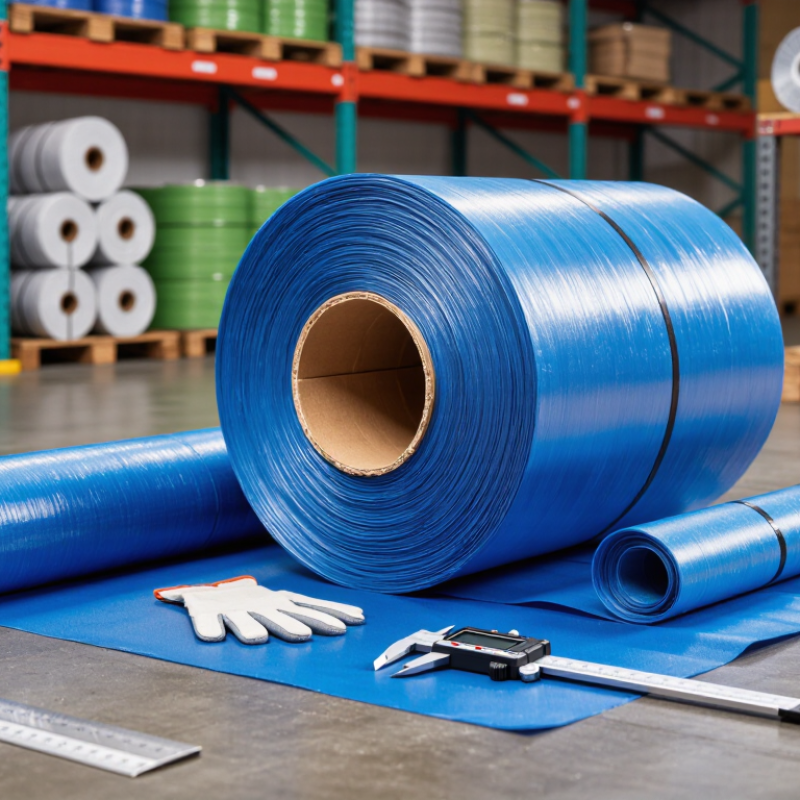
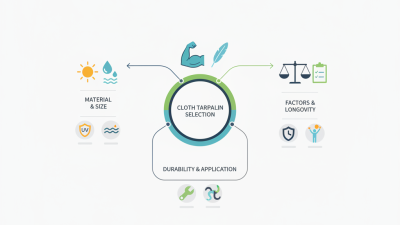
Picking the right PE Tarpaulin Roll isn't just about comparing prices. A dependable one does real work: it protects goods, workers, and equipment from rain, sun, dust, and all that repeated handling. Thickness matters, yes, but so do fabric density, coating quality, roll width, and edge reinforcement. Those are the things that affect how it performs day after day. And a heavy-looking sheet can still rip if its weave is weak. That's a detail people miss all the time.
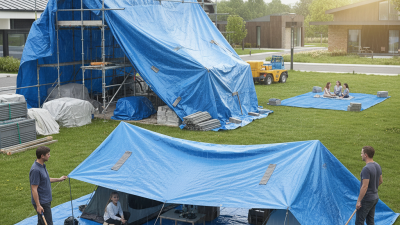
Daniel Harper, a PE tarpaulin specialist at Northstar Industrial Fabrics, puts it well: “A dependable tarpaulin begins with the application, not the sales label.” That's practical advice. A Roll Tarpaulin for covering trucks needs different strength than one used for temporary storage. If you're using it outdoors, look at UV resistance, waterproofing, heat tolerance, and how easily it folds. Construction buyers might need reinforced hems and eyelets that are spaced closely enough. Agricultural users often want ventilation options and coverage that stays put.
This guide walks through seven useful tips for choosing the best PE Tarpaulin Roll for your specific working conditions. It looks at material grades, GSM, lamination, size accuracy, accessories, supplier credibility, and inspection methods. Small details really do matter. Run your hand over the surface. Check the stitching. Measure the roll.
No product is perfect, and buying decisions usually involve some compromise. A thicker tarp can last longer, but it's also heavier to handle. A cheaper option may look tempting, but you might end up replacing it sooner. We also tend to forget about storage conditions—and those can damage even a well-made sheet. Careful buyers compare specs against real use, ask for samples, and confirm performance claims before placing big orders. A reliable supplier should be able to explain their testing standards clearly.
Before choosing a PE tarpaulin roll, define the job precisely. A garden cover, truck load sheet, and temporary shelter require different dimensions. Measure the object’s length, width, height, and tie-down points. For a box-shaped load, calculate length as load length plus twice the drop height and extra overlap. Add at least 30 centimeters for securing edges. More is not always better. An oversized sheet may collect water, flap loudly, or create dangerous tension around eyelets.
Industry data supports careful material selection. The United Nations Environment Programme reported that more than 430 million tonnes of plastic are produced globally each year, with much of it designed for short use. Correct sizing can reduce trimming, replacement, and avoidable waste. PlasticsEurope reported global plastics production at about 414 million tonnes in 2023, showing why responsible purchasing matters. Still, these figures do not tell you the right roll width.
Consider storage and handling conditions. A narrow roll may require extra seams, while an excessively wide roll can become difficult to fold and transport. For agricultural use, allow space around stacked bales for ventilation and tie-down movement. For transport, check whether the roll covers the load without blocking lights or access points. Measure twice. I have found that small errors often become expensive after cutting. Also review GSM, tear strength, and UV resistance alongside dimensions. A perfect size can still fail when the fabric is too light.
Choosing a Tarpaulin Roll starts with understanding its PE fabric structure. Woven polyethylene provides a strong grid for repeated handling. Laminated PE adds water resistance through bonded surface layers. Coated fabric usually feels smoother and cleans more easily. I have found that fabric texture matters when workers fold the sheet daily. A slippery surface may save cleaning time but reduce grip during installation.
Thickness needs careful comparison. Measure it in microns, or compare the total fabric weight in GSM. Light materials suit temporary covers and indoor storage. Heavier grades resist abrasion, wind, and sharp contact better. Still, thicker is not automatically stronger. I once assumed thickness guaranteed durability, but weak seams proved otherwise. Check denier, mesh density, and tear strength together. Small details matter.
Look closely at the edges and eyelets. Reinforced hems distribute pulling force across the fabric. Metal eyelets should sit firmly, without loose surrounding fibers. For outdoor use, request evidence of UV resistance and water penetration testing. Ask for test reports, production specifications, and clear tolerances. Reliable information is more useful than a bold durability claim. Try bending, stretching, and lightly rubbing a sample before ordering. Your real application may expose weaknesses that a product sheet misses.
Choosing a Pe Tarpaulin Roll begins with its waterproofing performance. Do not trust a glossy surface alone. Inspect the weave, coating, and heat-sealed edges. Water often enters through stitching holes, folded corners, or damaged eyelets. Ask for hydrostatic pressure test results when covering machinery, crops, or building materials. For outdoor storage, place a sample under running water for several minutes. Check the underside carefully. A small leak can become serious after overnight rain.
UV resistance matters in sunlight. Polyethylene fabric can become brittle when exposed for long periods. Look for stated UV stabilizer content, tested exposure hours, and tensile-strength retention data. Dark colors may absorb more heat, while lighter surfaces can reduce temperature buildup. Neither choice guarantees long service life. Installation tension, trapped moisture, and local sunlight also affect performance. I once saw a thick sheet crack along a fold after one hot season. Thickness alone was not enough.
Weather protection requires more than waterproofing. Choose reinforced hems, secure eyelets, and enough overlap for strong wind. A tarp stretched tightly over sharp equipment may tear quickly. Rounded supports and padded contact points help. In cold regions, flexibility testing is useful because some materials stiffen below freezing. In my experience, product specifications are helpful, but field conditions can expose weaknesses. Request independent test documents, inspect a physical sample, and compare the stated warranty with your expected exposure. Small details matter.
A thick Pp Tarpaulin Roll can still tear around a sharp corner. Stretch a sample by hand, then inspect the woven threads. I also test a small cut near the edge. This reveals weak fabric faster than appearance alone. My quick test is not laboratory-perfect, but it exposes obvious defects.
Strong hems should contain folded fabric, dense stitching, or a welded inner layer. Look for loose threads, uneven folds, and thin corners. Pull the hem gently. It should feel firm, not papery. Reinforced edges help prevent tearing when wind pulls the sheet repeatedly.
Quality grommets should sit flat, with clean holes and firm surrounding material. Press around each opening. Soft or cracked fabric may fail during installation. Grommet spacing also matters, especially for large covers. I once trusted attractive hardware and overlooked weak backing. That mistake was costly.
Reliable suppliers should explain fabric weight, coating, seam construction, and expected outdoor use. Request a sample when possible. Real handling often reveals problems that specifications hide. A small flaw can become a large tear.
7 Tips for Choosing the Best PE Tarpaulin Roll
Choosing the right PE tarpaulin roll starts with its weight. Check the fabric’s GSM, then match it to the working condition. A lightweight roll is easier to carry and fold. It suits temporary covers, market stalls, and short storage periods. Heavier material offers stronger resistance against wind, abrasion, and repeated use. However, thicker is not always better. It can become awkward to transport and difficult to secure.
Flexibility matters when the roll must cover uneven objects. Bend a sample around a tight corner and inspect for whitening or cracking. A flexible sheet folds smoothly around pipes, timber, or stacked equipment. It also reduces wasted space during storage. Do not ignore handling details. Look for a manageable roll diameter, a firm core, and edges that do not collapse easily. Small features matter.
A practical check should include weight, thickness, flexibility, roll length, edge strength, surface feel, and storage convenience. I once selected a heavier roll for outdoor protection. It resisted tearing well, but two workers struggled to move it. That choice looked efficient, but it was not. Ask for test data, then handle a sample yourself. Grip the roll with dry gloves and wet gloves. Try folding it several times. Real handling often reveals problems that a specification sheet misses.
| Tip | Selection Factor | Recommended Specification | Why It Matters | Practical Check | Best Use |
|---|---|---|---|---|---|
| 1 | Match the Fabric Weight | Choose approximately 90–120 g/m² for light-duty covering, 120–180 g/m² for general-purpose use, and 180–250 g/m² for heavier outdoor protection. | Higher fabric weight generally provides greater resistance to abrasion, punctures, and wind, but it also increases roll weight and handling effort. | Compare the stated mass per square metre rather than judging thickness by appearance alone. | General covering |
| 2 | Check Thickness and Construction | For many reusable applications, a thickness of approximately 0.10–0.20 mm is practical. Look for woven PE fabric with laminated surfaces and sealed or reinforced edges. | Woven reinforcement helps distribute tension, while lamination improves water resistance and surface protection. | Inspect the weave, lamination consistency, edge finish, and any visible pinholes or delamination. | Repeated use |
| 3 | Prioritize Flexibility | For frequent folding and installation, select a flexible grade that remains pliable in the expected operating temperature. Avoid material that becomes excessively stiff or brittle when folded. | Flexible tarpaulin conforms more easily to irregular loads and is less likely to crack at folds during handling. | Fold a small sample several times and check whether creases whiten, crack, or separate. | Frequent setup |
| 4 | Evaluate Roll Weight and Width | Select a roll width that minimizes seams, while keeping the roll manageable. As a general planning guide, a 100 m² roll at 120 g/m² weighs about 12 kg, excluding packaging. | Wider rolls reduce joining work, but heavier rolls may require two-person lifting or mechanical assistance. | Estimate roll mass using: area × fabric weight. Confirm the core diameter and packed dimensions before ordering. | Easy handling |
| 5 | Confirm Tear and Tensile Strength | For demanding applications, request published tear strength, tensile strength, and elongation values. Reinforced woven grades are generally more suitable than thin film-only sheets. | Strength data helps indicate how the material may perform under pulling, wind load, tie-down stress, and accidental snagging. | Ask for test methods and sampling conditions because results can vary by direction, temperature, and testing standard. | Wind exposure |
| 6 | Check Weather and UV Resistance | For outdoor storage, choose a sheet with a documented UV stabilizer or weathering specification. Short-term and long-term exposure require different protection levels. | Sunlight, heat, rain, and temperature changes can gradually reduce flexibility and strength in polyethylene products. | Review the stated outdoor service guidance, test duration, and storage recommendations instead of relying only on color or surface appearance. | Outdoor storage |
| 7 | Inspect Handling Features | For repeated installation, consider reinforced hems, evenly spaced eyelets, strong webbing, and a smooth surface that rolls and unrolls without excessive sticking. | Good edge reinforcement transfers tie-down loads away from the fabric and helps reduce tearing around attachment points. | Check eyelet spacing, hole alignment, hem width, roll tightness, and whether the roll can be moved safely by the available workforce. | Frequent transport |

Choosing the right PE tarpaulin roll starts with accurate measurements. Measure the covered length and width, then add at least 30 centimeters on each side for folding, fastening, and drainage. A tight sheet can tear around eyelets when wind lifts the edge. A loose sheet may collect water and sag.
For example, a 4.2-meter truck bed may need a roll at least 4.8 meters long. Check the usable width, not only the advertised width. Some rolls lose a small amount through edge cutting or heat-sealed hems. For long agricultural rows, calculate the total distance before ordering. A 50-meter roll may reduce joints, but it can create handling problems during installation. Roll Up Tarpaulin should match your team’s lifting ability, storage space, and cutting plan.
The Freedonia Group’s World Tarps analysis identifies construction and agriculture as major demand sectors. That supports choosing dimensions around the actual job, rather than buying by price alone. UNEP’s 2023 Turning off the Tap report states that global plastic production exceeds 430 million tonnes annually, with much of it designed for short use. A stronger, correctly sized PE sheet can reduce replacement waste. Still, I have seen buyers overestimate durability and ignore seam stress. They should check GSM, tensile strength, UV treatment, and waterproof testing data. ASTM D751 provides recognized methods for testing coated fabrics, while ISO 527 supports tensile-property evaluation for plastics. Reports help, but field conditions remain unpredictable.
Choosing the best PE tarpaulin roll starts with supplier reliability, not the lowest quotation. Request recent batch records, resin specifications, and a certificate of analysis. Check whether the supplier can trace each roll to production date and raw-material lot. Plastics Europe reported global plastics production of 400.3 million tonnes in 2022, showing the scale of this industry, but scale alone does not guarantee consistency. Ask for independent tests covering grammage, tensile strength, tear resistance, seam strength, and UV exposure. ISO 1421 and ASTM D751 provide useful test frameworks for coated fabrics. However, the method must match the actual PE construction.
Product standards should fit the working environment. Outdoor storage needs UV-stabilized material, sealed edges, correctly spaced eyelets, and stable dimensions after temperature changes. A clear specification is essential. Include thickness, GSM, color, waterproofing performance, and acceptable tolerances. A certificate alone is not proof. Ask for sample testing or a third-party inspection before a large purchase.
Total value means cost per service month, not price per roll. Compare usable coverage, delivery loss, replacement frequency, and disposal needs. The OECD Global Plastics Outlook found that only 9% of plastic waste was recycled in 2019, so longer service life deserves serious attention. A heavier roll may cost more but reduce replacements. I still find this calculation imperfect; sunlight, wind, and handling vary widely. Record field performance after three and six months. Small details matter. A reliable supplier accepts that feedback and improves the next batch.
Define the job first. Measure the object’s length, width, height, and tie-down points. For box-shaped loads, add twice the drop height and extra overlap. Include at least 30 centimeters for securing edges. Measure twice.
No. An oversized sheet may collect water, flap loudly, or strain its eyelets. It can also become difficult to fold and transport. More material may create more problems.
Check the fabric’s GSM and match it to the working conditions. Lightweight material suits temporary covers and short storage. Heavier material handles wind, abrasion, and repeated use better.
Not always. Thick fabric may resist tearing but become awkward to move. Two workers might struggle with one heavy roll. That happened to me. The safer-looking choice was not the easiest choice.
Flexible fabric covers uneven objects more smoothly. Bend a sample around a tight corner and check for whitening or cracking. It should fold around pipes, timber, and stacked equipment without damage.
Inspect the roll diameter, core strength, edge stability, and overall weight. Try gripping it with dry gloves and wet gloves. Fold the sample several times. Real handling can expose hidden problems.
Leave space around stacked bales for ventilation and tie-down movement. The cover should not press tightly against every surface. Airflow matters.
Confirm that the roll covers the entire load without blocking lights or access points. Check tie-down locations and edge strength. A perfect size can still fail if the material is too light.
Review GSM, thickness, tear strength, UV resistance, flexibility, and surface feel. Also consider roll length and storage convenience. Dimensions alone do not guarantee reliable performance.
Accurate measurements reduce trimming, replacement, and unused material. Avoid buying a roll that requires excessive cutting. Still, I may underestimate unusual shapes, so leave practical securing space.
Choosing the best Pe Tarpaulin Roll begins with clearly defining its intended use, such as covering materials, protecting equipment, or creating temporary outdoor shelter. Measure the required length and width carefully, then compare fabric types, thicknesses, and overall strength to ensure the roll can handle the expected load and working conditions. Waterproofing, UV resistance, and reliable weather protection are also essential for outdoor applications.
Pay close attention to tear resistance, reinforced edges, and securely fitted grommets, as these details affect durability and ease of use. The right weight should provide a practical balance between strength, flexibility, storage, and handling. Match the roll dimensions to your project to reduce waste and simplify installation. Finally, assess supplier reliability, product consistency, quality standards, delivery support, and total value rather than focusing only on the initial price. A carefully selected Pe Tarpaulin Roll can provide dependable protection and long-term performance.