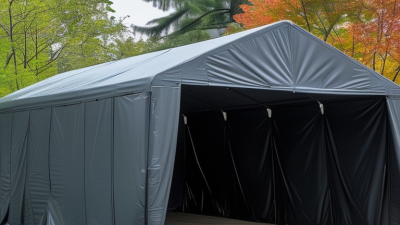
Picking one of the 10 best Rubber Tarpaulin suppliers isn’t just about comparing prices, you know? There’s a lot more to it. You have to get in there and check the coating, the fabric weight, the seam construction — and don’t forget how well it holds up against the weather. A tarp can look totally solid on a warehouse floor, then suddenly the eyelets start failing after you’ve had it pulled tight for a while. It’s the small stuff that really matters.
Look, Grand View Research pegged the global rubber market at around USD 46.44 billion in 2022, and they expect it to keep growing through 2030. But that number covers all rubber, not just rubber tarpaulins. So sure, it tells you there’s a big market out there—but it doesn’t really say anything about how good a specific supplier is. If you want to get technical, ASTM D751 lays out test methods for coated fabrics, including stuff like strength and coating performance. So when you’re evaluating suppliers, don’t just take a polished brochure at face value—ask for recent, traceable test results.
Materials scientist John D. Ferry’s work on viscoelasticity is a useful reminder—though it’s a pretty technical one, not some direct quote about tarps. The gist is, polymers respond differently depending on temperature and how they’re loaded. And that matters a lot when you’re buying a tarpaulin. So don’t just look at the specs; ask how the product actually performs in the conditions it’ll really face: heat, rain, abrasion, repeated folding. And by all means, get samples. Check the seams yourself.
Let's be honest—supplier claims sound great until you dig in. You'd be surprised how many specs stay vague until you specifically ask for the test method, sample size, or production details. So we put together this guide comparing ten suppliers, but we didn't just look at fancy brochures. We focused on practical stuff: material transparency, customization, quality documentation, and delivery capability. One more thing: this ranking is only a starting point. It can point you in the right direction, but it's no substitute for actually inspecting things yourself.
A Rubber Tarpaulin is typically a fabric reinforcement covered with a rubber layer. The fabric adds strength, while the coating helps resist water and abrasion. A Rubber Tarp can protect equipment from rain, dust, and splashes, but performance depends on its construction. Not every tarp handles the same conditions.
Common applications include covering machinery at outdoor worksites, shielding cargo during short-term storage, and protecting farm equipment between uses. In a workshop, a tarp can catch drips beneath a service area or separate a damp surface from stored materials. It is useful, not indestructible. Repeated dragging over sharp edges can wear through the coating, and trapped moisture may encourage corrosion underneath.
Choose a tarp by checking its thickness, reinforcement, seam construction, and stated resistance to sunlight or temperature changes. Look closely at the eyelets, too; weak attachment points may tear before the sheet does. Chemical resistance should never be assumed from the word “rubber.” Ask for product specifications when exposure to oils, fuels, or cleaners is expected. A heavier cover may last longer, but it can also be harder to lift and secure in wind. A practical fit matters.
A reliable rubber tarpaulin supplier should explain how its material suits your actual working conditions. Share the expected load, weather exposure, temperature range, and contact with oils or other substances. Then ask for specifications covering fabric strength, rubber coating, tear resistance, and finished thickness. Vague claims like “heavy duty” are not enough. Ask for test reports tied to the material being quoted, rather than a generic product sheet.
Details matter. Request a sample and inspect its edges, seams, surface consistency, and flexibility after folding. Check whether dimensions match the order and whether the coating feels uneven or tacky. A clean sample can flatter a product; it may not represent a full production run. Ask how the supplier checks each batch and handles defects. Their answer should be specific, not merely reassuring.
Compare quotes using the same dimensions, thickness, performance requirements, and delivery terms. Confirm production capacity, lead times, packaging, and how changes to an order are communicated. A supplier who asks careful questions may be more dependable than one who promises everything immediately. Still, paperwork cannot replace inspection. Keep your evaluation notes, and admit where evidence is thin before committing to a large order.
A credible shortlist of ten rubber tarpaulin suppliers should begin with verifiable product performance, not polished sales claims. Compare fabric weight, coating thickness, tensile strength, tear resistance, and seam adhesion. Ask for dated test reports and check whether the tested material matches the quoted product. Details matter. A tarp that resists rain may still crack in cold weather or weaken under repeated folding.
Assess manufacturing consistency as well. Request samples from more than one production batch, then inspect coating uniformity, eyelet spacing, reinforced corners, and cut edges. Ask how defects are recorded and corrected. Clear answers are useful; vague assurances are not. Suppliers should also explain lead times, minimum order quantities, packaging, and what happens when a shipment arrives damaged or late.
For a fair comparison, score each supplier against the same requirements and intended use. A warehouse cover and a truck cover may need different abrasion resistance, flexibility, or UV protection. Compare the total expected service life, not only the price per sheet. No single supplier will lead in every category. That is worth admitting. Some test data may be incomplete, and a sample cannot fully predict years of outdoor exposure. Combine documents, physical inspection, and specific questions before making a decision.
Use these criteria to compare prospective suppliers. The benchmarks are buyer-side evaluation guidance, not claims about any particular supplier or universal product requirements; set final limits according to the application and applicable regulations.
| Selection Criterion | What to Verify | Evidence or Comparison Benchmark |
|---|---|---|
| 1. Material and construction | Confirm the base fabric, rubber or elastomer coating, fabric weight, total thickness, and construction details for the quoted product. | Request a current technical data sheet and sample. Compare products using the same stated construction and units; do not treat “rubber-coated” as a complete material specification. |
| 2. Tensile strength | Check tensile strength in both the warp and weft directions, including the test method, specimen direction, and reported units. | Request test results for the exact product grade. ISO 1421 specifies methods for determining tensile strength and elongation of rubber- or plastics-coated fabrics. |
| 3. Tear resistance | Review tear-test results in both fabric directions and confirm which test procedure was used. | Compare results only when the test method, sample preparation, and units match. ISO 4674-1 covers methods for determining tear resistance of rubber- or plastics-coated fabrics. |
| 4. Coating adhesion | Ask how well the coating remains bonded to the textile reinforcement and whether results are reported for the offered construction. | Request a documented adhesion test and the applicable acceptance limit. ISO 2411 specifies methods for determining coating adhesion of rubber- or plastics-coated fabrics. |
| 5. Weather and UV resistance | Determine the expected exposure conditions, such as sunlight, rain, temperature changes, and the intended service environment. | Request exposure-test details and before-and-after results relevant to the application. Compare samples tested under the same exposure conditions; avoid relying on unsupported service-life claims. |
| 6. Water resistance and seam integrity | Verify the finished tarp’s water-resistance performance, including seams, hems, eyelets, and any welded or bonded joints. | Ask for the test method, pressure or exposure conditions, sample configuration, and acceptance criteria. Where practical, assess a finished sample rather than coating material alone. |
| 7. Dimensional and fabrication accuracy | Check finished dimensions, tolerance, edge finish, reinforcement, eyelet spacing, and corner design against the purchase specification. | Require a written drawing or order specification with measurable tolerances and inspection points. Confirm whether quoted dimensions refer to cut size or finished size. |
| 8. Quality management and traceability | Review the supplier’s quality-control process, inspection records, handling of nonconforming goods, and ability to trace production lots. | Request relevant audit or certification evidence and a sample inspection record. ISO 9001 sets requirements for quality management systems; certification alone does not guarantee a particular tarp’s performance. |
| 9. Capacity and delivery reliability | Confirm available production capacity, lead time, minimum order quantity, packaging, and arrangements for repeat orders. | Compare written lead times and order terms for the same quantity and specification. Ask for delivery-performance records or references relevant to comparable orders. |
| 10. Technical support and total cost | Assess specification support, sample availability, complaint handling, warranty terms, and the clarity of pricing and shipping conditions. | Compare total landed cost—not unit price alone—including freight, duties where applicable, inspection, packaging, and expected replacement needs. Obtain warranty scope and exclusions in writing. |

Profiles of ten notable rubber tarpaulin suppliers are best compared by what they make and how they verify it. A coated-fabric mill may offer consistent thickness and clear production records. A truck-cover specialist understands reinforced hems and frequent folding. A regional fabricator can adjust dimensions quickly. A large-volume exporter may provide broad stock options, but confirm delivery schedules. A custom-cut workshop can shape covers for unusual loads. Small details matter.
A heavy-duty sheet producer should explain fabric weight, coating, and seam construction. An agricultural supplier may prioritize rot resistance and easy cleaning. A construction-focused maker can advise on abrasion and edge reinforcement. A UV-resistant fabric supplier should provide test information, not just a sun-protection claim. A distributor with several material grades can help compare HDPE Tarpaulin and rubber-coated alternatives. Ask whether samples match bulk orders. They sometimes do not.
Tips: Request a sample and inspect its seams, flexibility, and finish. Ask how Outdoor Truck Cover options handle wind, rain, and repeated use. For UV Protected Tarp or Rot Proof Tarpaulin, check care instructions and documented performance. Compare warranties carefully; vague terms deserve a second look. A supplier may sound confident, yet leave practical questions unanswered.
Choosing among the 10 best rubber tarpaulin suppliers takes more than comparing prices. Check coating consistency, fabric weight, seam construction, and eyelet spacing. A small sample can reveal uneven coating or rough edges before a large order arrives. Ask how the supplier tests waterproofing and UV exposure, and request clear specifications rather than broad claims. A Heavy Duty PE Tarp should feel sturdy without becoming awkward to fold. An UV Resistant Tarpaulin should also suit the climate and expected outdoor use.
Customization matters when standard dimensions leave excess material or exposed corners. Ask whether the supplier can adjust size, color, hems, and fastening points. A Green Waterproof Cover may need reinforced seams for repeated handling, while a Reinforced Corner Tarpaulin can better withstand tension at tie-down points. Details matter. Service is just as practical: confirm sample availability, production timelines, packaging, and how defects are handled. Compare written responses, not just friendly promises. I would still test a sample under real conditions; specifications can miss what happens after weeks of wind and rain. A supplier’s willingness to discuss limitations can be more useful than a perfect sales pitch.
Choosing a rubber tarpaulin supplier starts with the job, not a glossy catalog. Describe exposure to sunlight, rain, oils, or repeated folding, then ask for matching material data. A Tarpaulin used over a worksite may need different reinforcement from one lining a storage area. Ask for fabric weight, coating thickness, seam method, edge reinforcement, and temperature range in writing. Specific answers matter. Request a cut sample and bend it repeatedly; inspect for cracking, coating lift, and uneven seams. This simple check cannot predict years of service, but it can reveal obvious weaknesses.
Compare suppliers on traceability, inspection records, sample consistency, lead time, and how they handle defects. Ask whether test figures apply to finished sheets or only raw fabric; that distinction is easy to miss. For large orders, confirm dimensions, eyelet spacing, packing, and replacement terms before committing. A careful supplier will explain limitations without turning every answer into a promise. Keep the quotation and approved sample together, especially when colors or thicknesses vary between batches. Lowest price can be tempting. Still, weak seams or vague specifications may cost more through downtime and early replacement. I would not choose on one sample alone; batch variation deserves a second look.
Construction tarpaulins serve practical needs across building sites, where materials and equipment may require temporary weather protection, separation, or containment. Their market context is linked to polyethylene’s wide use in packaging, construction, and other applications. Grand View Research valued the global polyethylene market at USD 117.6 billion in 2022 and projected a 4.1% compound annual growth rate from 2023 to 2030. This broad-market outlook provides useful context for demand for polyethylene-based products, though it is not a forecast specifically for construction tarpaulins.
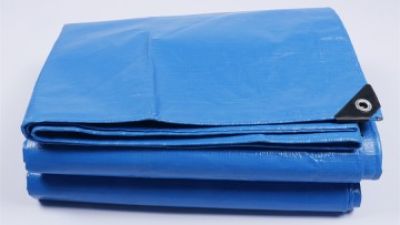
For outdoor and commercial projects, PE tarpaulins offered by the sheet or roll can be selected to suit different coverage needs. Silver/orange and blue/orange options, with a range of thicknesses and strengths, can support varied site applications. Other available fabric choices include vinyl, neoprene, canvas, clear vinyl, and camouflage, with material properties such as waterproofing or chemical resistance depending on the product. For specialized heat-related uses, silica fabric may be suitable for welding screens, furnace curtains, or heat shields. Buying by the sheet or roll allows users to choose flexible sizes and quantities for temporary covers, partitions, and other project requirements.
It usually combines a reinforced fabric with a rubber coating. The fabric adds strength, while the coating helps resist water and abrasion.
It can cover outdoor machinery, shield cargo during short-term storage, or protect farm equipment between uses. In a workshop, it can catch drips beneath a service area.
Check its thickness, reinforcement, seams, and stated resistance to sunlight and temperature changes. Strong eyelets matter, too; weak ones can tear before the sheet does.
No. Ask for specifications about the exact substances and working conditions. The word “rubber” alone is not enough.
Request written details on fabric strength, coating thickness, tear resistance, and finished-sheet performance. Ask for test reports linked to the material being quoted, not a generic sheet.
Check the edges, seams, surface, and flexibility after folding. Bend it repeatedly and look for cracks or coating lift. One sample cannot predict years of use.
Match dimensions, thickness, performance requirements, and delivery terms. Also confirm lead times, packaging, production capacity, and how order changes are handled.
I would not rely on one clean sample alone. Ask how each batch is checked, and keep inspection notes; variation still deserves a second look.
This article explores what makes a Rubber Tarpaulin suitable for demanding applications such as covering equipment, protecting materials, and providing durable outdoor shielding. It explains the main features buyers may consider, including material strength, resistance to wear and weather, available sizes, and suitability for different working conditions. It also outlines practical ways to evaluate suppliers, from reviewing product specifications and manufacturing capabilities to assessing communication, delivery reliability, and after-sales support.
The article compares ten notable supplier profiles using consistent selection criteria, with attention to product quality, customization options, and service. Rather than treating one supplier as the right choice for every project, it helps readers weigh their requirements, budget, order volume, and intended use. By understanding these factors and asking clear questions before purchasing, buyers can make a more informed decision and choose a supplier whose products and support align with their project needs.