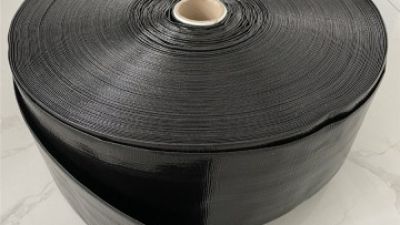
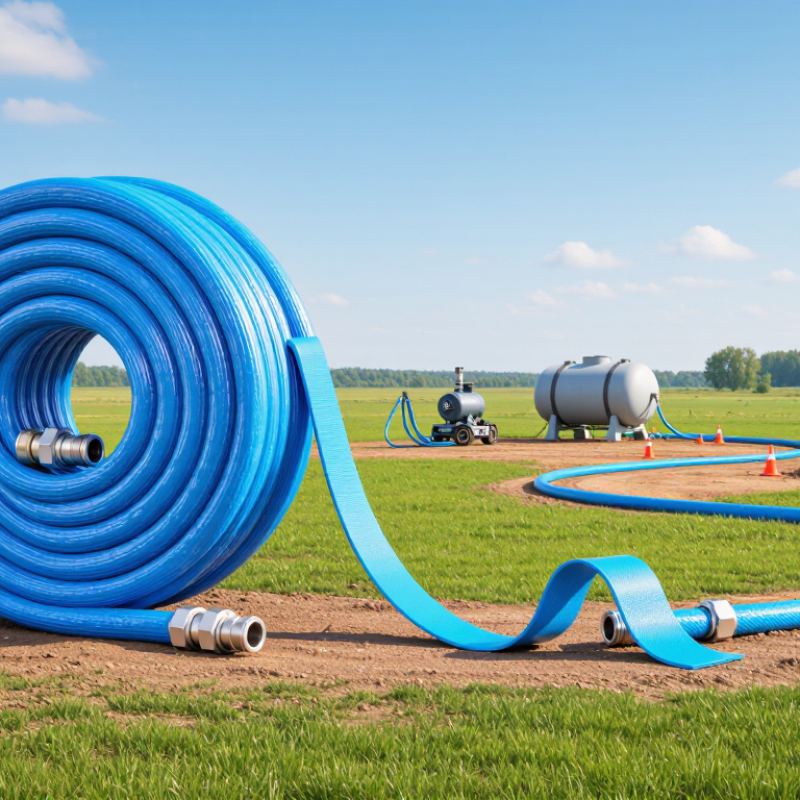
A flat pipe is basically a tube that's designed to lie flat when it's empty, but opens up into a passage once fluid starts flowing through it. You've probably seen versions of these called layflat hoses — they're flexible, reinforced with materials that make them easy to handle but still tough enough to handle pressure. You'll find them on farms, at construction sites, or used temporarily for water transfer. When they're rolled up, they can easily fit beside a pump or in a service vehicle. Unrolled, they’re great for moving water across fields without the hassle of bulky rigid pipes.
Now, just a heads-up: the term 'flat pipe' isn’t always used consistently. Different suppliers might call similar products different things, so it’s really important to check the specifications rather than just going by the name. Pay attention to details like diameter, maximum pressure, the material, temperature limits, and connection types. If these don’t match your needs, you might end up with leaks, poor flow, or premature wear and tear. Small details do matter! For instance, if you’re dragging a hose over jagged gravel, you’ll want one that’s more resistant to abrasion than if it’s used on a smooth surface.
And hey, while a flat tarp can cover stored equipment nearby, it’s not a substitute for a hose—it’s a different thing altogether. Picking the right one really depends on the route, the type of liquid you're handling, and the conditions you’re working in. Even a high-quality pipe has its limits, so understanding the basics of different designs and practical tips can help you make better choices — but keep in mind that real-life setups often aren’t perfectly neat and tidy like the product images suggest. This guide covers common designs, uses, and what to look out for, but ultimately, every situation is a bit different.
What Is a Flat Pipe?
What Is a Flat Pipe?
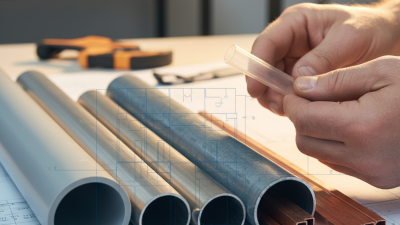
A flat pipe is a long, narrow tube with a flattened or rectangular profile. It is commonly made from steel or aluminum. In flatbed hauling, it supports, tightens, or rolls a tarp across cargo. Its shape gives the pipe useful strength without adding unnecessary height.
The term can be confusing. Some flat pipes are used as tarp rollers, while others act as support bars inside tarp pockets. A Flat Bed Tarp may use several pipes to keep fabric above uneven loads. This reduces sagging and helps water run off instead of collecting in shallow folds. The pipe can also create a firmer edge, especially when straps pull the tarp tightly.
A properly fitted flat pipe should sit straight and remain secure during movement. Workers usually check for bends, sharp edges, loose fittings, and corrosion before use. Even a small burr can damage tarp fabric over time. The correct size depends on the trailer, tarp design, load shape, and fastening system. Measurements matter.
It is easy to overestimate its strength. A flat pipe should not replace approved tie-down equipment or compensate for poor load control. In practice, the pipe works as part of a complete covering system. Its performance may decline when overloaded, badly aligned, or exposed to repeated impacts. The design is simple, but the details are not.
What Materials and Types of Flat Pipe Are Available?
Flat pipe is a flexible conduit that expands when air, water, or other fluids pass through it. Unlike rigid tubing, it can be rolled, folded, and stored in compact spaces. In field installations, this makes transport and temporary routing much easier.
Polyethylene is common for lightweight water discharge and irrigation work. It resists moisture, but sharp gravel can puncture it. PVC-coated fabric offers better flexibility and handles moderate pressure in ventilation or dust-control systems. Reinforced rubber flat pipe is tougher and more suitable for demanding pumping conditions, where abrasion and repeated bending are expected. Some designs use woven polyester layers for extra tensile strength. These layers help prevent sudden expansion.
Types vary by structure and purpose. Lay-flat hose is designed to flatten completely when empty, while semi-flexible flat tubing keeps a wider internal passage. Food-grade versions use carefully selected inner surfaces for hygienic fluid transfer. Heat-resistant types suit warm air, but their limits must be checked carefully. High-pressure models often include multiple reinforcement layers and stronger couplings.
I have found that fitting quality matters as much as pipe material. A strong pipe can still leak through a weak connection. Pressure, temperature, fluid compatibility, and ground conditions should be reviewed together. Size selection is easy to underestimate. A larger pipe may reduce flow resistance, yet it can become awkward to position. Some choices look efficient on paper but perform poorly in real work. That is why a short trial installation can reveal problems before full deployment.
What Is a Flat Pipe and What Is It Used For?
A flat pipe, also called a lay-flat hose, is a flexible tube that collapses into a flat profile when empty and expands when pressurized. It is commonly used for temporary water transfer, irrigation, drainage, dewatering, and slurry handling.
Common Flat Pipe Types and Materials
PVC flat pipe is lightweight, economical, and widely used for irrigation and general water transfer. TPU flat pipe offers better abrasion and flexibility performance for demanding water and slurry applications. Rubber flat pipe is highly flexible and durable, making it suitable for industrial, mining, and heavy-duty service. Reinforced designs use textile layers to improve pressure resistance.
The chart shows representative nominal widths commonly used for different applications. Actual sizes, pressure ratings, and temperature limits depend on the pipe construction, reinforcement, fluid, and operating conditions.
How Does a Flat Pipe Work?
A flat pipe is usually a flattened heat pipe designed to move heat through a thin space. It contains a sealed working fluid, a porous wick, and a small internal vacuum. When heat reaches the evaporator section, the fluid absorbs energy and turns into vapor. The vapor travels quickly toward a cooler condenser section. There, it releases heat and becomes liquid again.
The wick then returns the liquid through capillary action. No mechanical pump is required. This cycle can continue even when the pipe is placed horizontally, although gravity and installation angle still affect performance. The U.S. Department of Energy identifies heat pipes as useful passive cooling devices because they transfer heat without continuous pumping power. The International Energy Agency’s Energy Efficiency 2024 report also notes that space cooling uses more than 10% of global electricity demand, making passive thermal control increasingly relevant.
Flat pipes fit beneath batteries, circuit boards, LED modules, and compact enclosures. Their broad, thin surface spreads heat across a larger area, reducing local hot spots. A 45°C battery zone may therefore distribute heat toward a cooler metal frame instead of remaining concentrated. The limitation is often overlooked. Performance depends on wick quality, fluid selection, sealing, contact pressure, and condenser airflow. Real installations rarely match laboratory figures. A pipe can look efficient on paper, yet fail when its surface is poorly bonded. Designers should verify thermal resistance under real orientation, vibration, and operating temperatures.
What Is a Flat Pipe and What Is It Used For? — How Does a Flat Pipe Work?
| Aspect |
How It Works or What It Means |
Common Uses and Practical Notes |
| Definition |
A flat pipe is a flexible, collapsible tube that can lie flat when empty or depressurized. It is commonly called lay-flat hose or lay-flat tubing. |
It is used to move water and other compatible fluids where lightweight handling and compact storage are useful. |
| How it works |
When fluid enters under pressure, the flexible walls open and the tube becomes rounded. When flow stops and pressure is released, it can flatten again. |
Flow depends on the pump or other pressure source, the pipe’s inside diameter and length, and restrictions such as bends or fittings. |
| Typical construction |
Many types use a flexible polymer lining with a woven textile reinforcement. Construction varies by intended pressure, fluid, and working conditions. |
Check the product’s material-compatibility and pressure ratings before use; these are not the same for every flat pipe. |
| Agricultural irrigation |
Water is pumped through the pipe and distributed to fields through suitable outlets, connectors, or irrigation equipment. |
Useful for temporary or seasonal water conveyance. Secure connections and appropriate operating pressure help reduce leaks and bursts. |
| Dewatering and drainage |
A pump can discharge collected water through a flexible line to a designated drainage point. |
Used on construction sites, in flooded areas, and for general water removal. The route should avoid sharp edges and vehicle traffic where possible. |
| Temporary water transfer |
The pipe can be unrolled between a water source and a receiving location, then rolled or folded for storage after use. |
Its compact storage and low weight when empty can make it easier to transport than rigid pipe for temporary jobs. |
| Diameter and length |
Flat pipes are available in different diameters and lengths; there is no single standard size for all applications. |
Choose a size that suits the required flow, pump connection, route length, and pressure. Longer or narrower runs can increase flow resistance. |
| Advantages |
It is flexible, lightweight when empty, quick to deploy, and can be stored in a relatively compact form. |
These features are particularly useful when a temporary, movable water line is needed. |
| Limitations and care |
It can be vulnerable to punctures, abrasion, kinks, excessive pressure, and unsuitable fluids. A flattened line is not necessarily suitable for suction. |
Follow the manufacturer’s pressure and temperature limits, inspect the line and fittings, and drain and store it as recommended. |
Note: “Flat pipe” can refer to different flexible products. Confirm the intended fluid, operating pressure, temperature range, and connection type for the specific pipe before selecting or using it.
What Are the Common Uses of Flat Pipe?
“Flat pipe” can describe a collapsible hose with a flattened profile or rigid flat-oval tubing. The right choice depends on the job. Collapsible pipe is common in farms, landscaping, construction, and temporary pumping. It carries irrigation water across fields, drains pooled water, or routes water around a work area. When empty, it lies nearly flat, making storage and transport easier.
FAO’s AQUASTAT database estimates that agriculture accounts for about 70% of global freshwater withdrawals, underscoring why dependable water delivery matters. Flat pipe does not save water by itself; leaks, poor sizing, and unsuitable pressure can still waste it.
Rigid flat-oval pipe is used in HVAC systems where ceiling space is tight. Its wider, shallower shape can fit above corridors or between structural elements, while carrying conditioned air. Some industrial and vehicle systems also use shaped tubing when clearance or packaging is limited. Check the pipe’s material, pressure rating, temperature range, and connection method before installation.
For irrigation, inspect for punctures and avoid dragging hose over sharp gravel. It is easy to overvalue the convenience. A flat profile may solve a space problem, but it does not automatically improve flow or durability. Real conditions matter.
What Are the Benefits and Limitations of Flat Pipe?
A flat pipe is a flexible water conduit that lies flat when empty and opens under pressure. Many versions use reinforced plastic, though construction and pressure ratings vary. It can carry irrigation water across a field, move water around a worksite, or help drain a flooded area.
Its main advantage is practical handling: a long section can be rolled onto a small reel, carried by one person, and deployed without assembling many rigid lengths. That saves storage space. It also makes temporary water routes easier to change.
Those advantages come with trade-offs.
Flat pipe generally needs pressure within its rated range; excess pressure can damage seams or connectors. Dragging it over gravel, sharp edges, or rough concrete may wear or puncture the outer layer. Kinks can restrict flow, especially at bends or where the pipe is trapped beneath equipment.
It is not a rigid substitute where a line must support its own weight or hold a fixed shape. Not always. Before choosing one, check the working pressure, diameter, fittings, temperature range, and exposure conditions on the product specification.
I would not call it maintenance-free: rinsing away grit, drying it before storage, and checking for cuts can extend its useful life. Real conditions may still shorten that life.
Black PE Lay-Flat Hose: Choosing the Right Size and Pressure for Irrigation Mainlines
Choosing the right black PE lay-flat hose starts with the flow your irrigation system must deliver, not simply the pump outlet size. Estimate the combined demand of the operating laterals, then select a hose diameter that carries that flow without excessive friction loss. A smaller diameter can reduce purchase cost but may cause pressure to fall along a long mainline; an oversized hose may add cost without improving performance. FAO AQUASTAT reporting puts agriculture’s share of global freshwater withdrawals at about 72%, underlining why efficient water delivery matters. For a practical design, check pressure at the most distant outlet as well as at the pump, and account for elevation changes—especially when laying a mainline across hills or uneven fields.
PE lay-flat hose is formed by thermal extrusion and is used as a main, branch, or distribution line in fields and greenhouses. Its light, flexible construction can simplify installation, while its resistance to corrosion and temperature variation supports use in varied growing environments. Choose a pressure rating that exceeds the system’s expected maximum operating pressure, including pump conditions and pressure surges; do not treat compression strength as a substitute for a stated working-pressure rating. Confirm the hose’s rated flow and pressure with the supplier, and size the line using its length, required flow, terrain, and desired pressure at the outlets. These checks help match hose size to irrigation needs while taking advantage of its durability, long service life, and straightforward maintenance.
Conclusion
A Flat Pipe is a flexible tube designed to lie flat when empty, making it easier to store and transport than rigid piping. It is commonly made from materials such as PVC, rubber, or polyurethane, and may include woven reinforcement to improve strength and pressure resistance. Manufacturers form the tube through extrusion or layered construction, then add fittings suited to its intended connections. When fluid enters under pressure, the flattened walls open to create a passage for flow; when the pipe is drained, it collapses again.
Flat Pipe is used for tasks such as irrigation, drainage, water transfer, and temporary fluid delivery in construction or other field settings. Its low weight, compact storage, and quick deployment are key advantages, especially where a rigid pipe would be cumbersome. However, performance depends on the material and design: a flat pipe may be vulnerable to punctures, kinking, or wear, and it must be matched to the required pressure, temperature, and fluid conditions.


 Wanggou Industrial Park,Lanshan District, Linyi City, Shandong Province, China