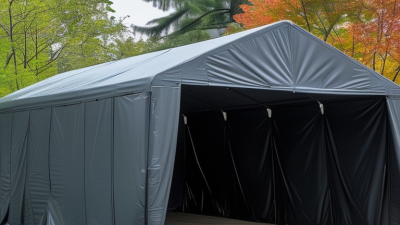
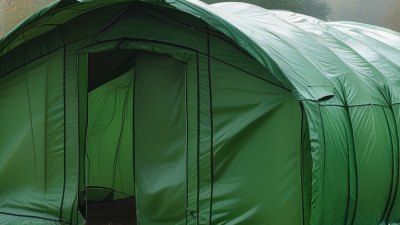
So, polyethylene canvas is one of those materials that pops up everywhere—construction sites, farms, transport, even just covering stuff outside. When buyers are looking into it, they usually get into the nitty-gritty: thickness, weave, coating, seam strength, how it handles weather. And honestly, those details really matter. Think about it: you've got a stack of timber sitting through a rainy season, or machinery baking under harsh sun—if the canvas isn't up to snuff, you're in trouble. But here's the catch: the word "canvas" can mean a few different things depending on who's selling it. So yeah, you've got to read those product specs closely, not just glance at them. It's one of those things where a little attention upfront saves a headache later.
You know, the OECD’s 2022 Global Plastics Outlook really puts things into perspective—global plastics production hit 460 million tonnes back in 2019, which is double what it was in 2000. That number helps you appreciate the sheer scale of materials out there, but honestly, it doesn't tell you much about tarpaulin demand or how good the products actually are. And those details matter a lot. So for anyone buying globally, you can't just rely on price tags or what the catalog claims—you've got to dig deeper into the supplier's actual performance. First off, when you're talking to suppliers, don't just take their word for it. Ask for actual technical specs, and make sure they show you sample inspections. Also, check that their production is consistent across batches. And if they claim something about UV resistance or tensile strength, ask for real evidence to back that up. Sure, a UV-resistant polyethylene tarpaulin might be fine for long outdoor use, but honestly, how long it lasts really depends on the specific formulation, how it's built, the climate where you're using it, and even how you handle it. There's no single spec that guarantees the same performance everywhere—it's just not that simple.
So, if you're an international buyer scoping out Chinese manufacturers, this guide is your starting block. We've lined up 10 companies worth your attention. You'll want to dig into a few key things: their product range, how flexible they are with customization, their track record in exports, and whether they've got solid quality documentation. But honestly, don't take their word for it—check those claims directly. Brochures and listings? They're just the appetizer, not the main course. This comparison gives you a good sense of who's who, but it's not the final verdict. At the end of the day, the best fit really depends on your specific needs—like what you're building, your delivery timeline, and how thorough your verification process is. So, take this as a handy reference, but make sure you do your own homework.
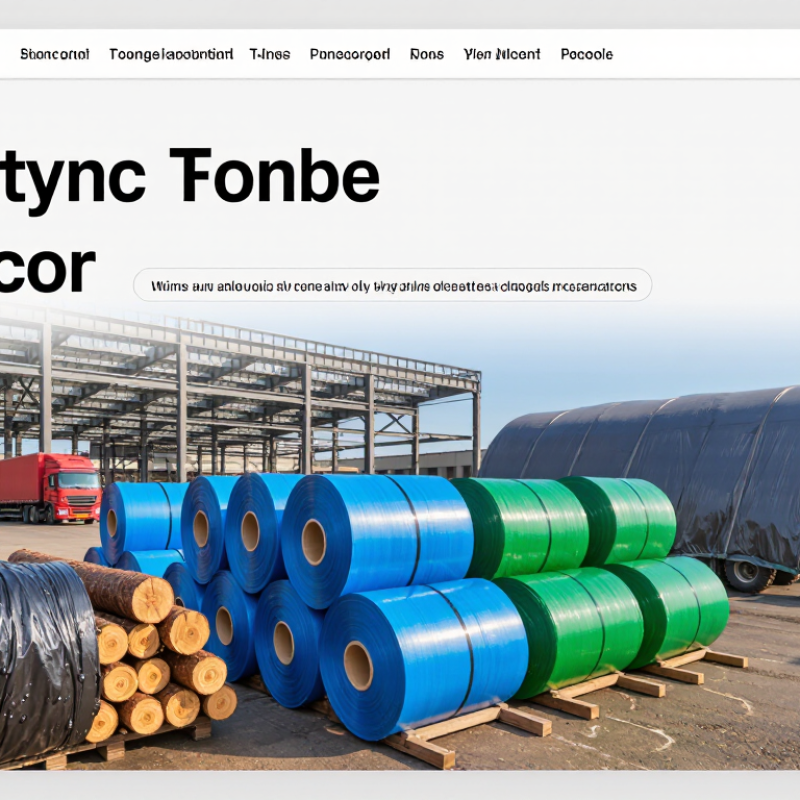
Polyethylene Canvas Defined: HDPE Woven Scrim, LDPE Coating, and GSM
A Polyethylene Tarp is a layered fabric, not a solid plastic sheet. Its HDPE woven scrim carries tension; LDPE coatings help block water and protect the weave. Look closely at a cut edge: the crossed strands form the scrim, while the smoother outer layers are coatings. Plastics Europe’s Plastics—The Fast Facts 2024 reports 413.8 million tonnes of global plastics production in 2023. That scale helps explain polyethylene’s broad availability, but it does not predict a tarp’s performance.
GSM means grams per square metre. It measures fabric mass, not strength or thickness by itself. A higher GSM may come from heavier scrim, thicker coating, or both. Ask suppliers to specify those components separately, and compare test results using relevant methods such as ASTM D3776 for fabric mass and ASTM D751 for coated-fabric properties. Seam construction and UV exposure also matter. A heavier sheet is not automatically tougher.
Tips: Match the tarp to its job. For outdoor storage, check coating coverage, reinforced edges, and stated UV performance. Request a sample and inspect its weave and seams. GSM alone can mislead; I would not choose from that number without construction details.
Global Market Scope: Applications, Buyer Regions, and Trade Factors
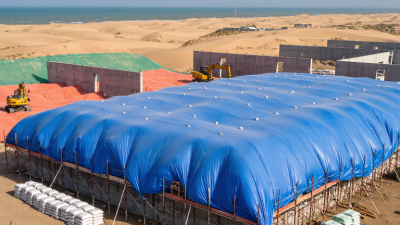
Global demand is shaped by weather, logistics, and local work practices. Tarp Polyethylene products serve construction sites, farms, transport fleets, outdoor storage, and temporary shelters.
Buyers often compare fabric weight, weave density, coating, edge reinforcement, and UV performance. A cover that lasts through a mild season may fail under strong sun or repeated folding.
Small details matter.
Importers in North America and Europe may prioritize consistent specifications, color options, and documented test results. Buyers in Southeast Asia, Africa, and Latin America may focus more on heat resistance, rainfall protection, and reliable replacement supply. These patterns vary by project; regional assumptions can mislead.
For Chinese manufacturers, export planning also involves shipment size, packaging volume, lead time, inspection terms, and clear product descriptions. Ask whether quoted weight refers to finished fabric or base cloth.
That distinction can change comparisons.
Freight costs can outweigh a modest unit-price difference, especially for bulky rolls. Sample testing is useful, but one sample cannot represent every production batch. A practical sourcing review should match the intended use, climate exposure, and delivery schedule before price becomes the deciding factor.
How PE Canvas Is Made: Weaving, Lamination, and Edge Reinforcement
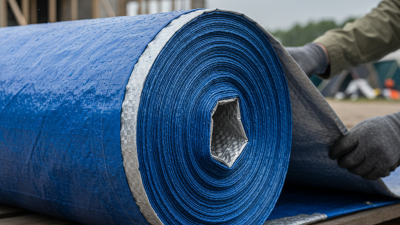
PE canvas begins with high-density polyethylene tapes drawn into flat, narrow strands.
Looms interlace them into a grid, and the weave density sets a practical balance: tighter patterns resist punctures, while open patterns use less material. A strand may look simple, but uneven tension can leave weak bands. That flaw is easy to miss.
The woven base is then laminated, commonly with polyethylene film on one or both sides. Heat and pressure bond the layers, closing gaps and improving resistance to rain and dust. Plastics Europe’s Plastics—the Fast Facts 2024 report estimates global plastics production at 413.8 million tonnes in 2023. That figure describes the wider plastics supply, not PE canvas alone, but it shows the scale behind its feedstock. In production checks, coating weight and adhesion matter; a glossy surface is not proof of a durable bond.
Edges take extra stress. Manufacturers may fold and heat-seal the perimeter, add reinforced strips, or stitch folded hems around ropes and eyelets. These details help prevent tearing when sheets flap in wind or are pulled over a load. ASTM D751 provides test methods for coated fabrics, including tests of breaking strength and tear resistance. Still, a strong test result cannot fully predict years of abrasion outdoors. Inspect the corners, seams, and eyelet spacing. Small defects often start there.
Performance Data: ISO 1421 Tensile Testing and 1 mil = 25.4 μm
For global buyers comparing Polyethylene Tarpaulin, tensile figures need context. ISO 1421 measures tensile strength and elongation in coated fabrics. Ask whether the report identifies both warp and weft directions, specimen width, test method, and conditioning. Small details matter. A strong warp result cannot hide weaker crosswise performance. Look for results from representative production samples, not only a carefully selected specimen.
Thickness also needs clear units. One mil equals 25.4 μm, so a 10 mil sheet is nominally 254 μm thick. Simple conversion. Yet polyethylene layers and woven reinforcement can make readings uneven. Ask how thickness was measured and whether the method accounts for surface texture. Compare like with like. A micrometer reading without pressure or sampling details may mislead. In practice, I would review the test date, batch identification, and repeat results before judging a supplier. Even then, a lab report cannot predict every handling condition. That is worth remembering.
China Top 10 Polyethylene Canvas Manufacturers for Global Buyers - Performance Data: ISO 1421 Tensile Testing and 1 mil = 25.4 μm
Buyer comparison framework: The rows below list ten practical specification checks for polyethylene-coated woven canvas. They are not supplier-specific test results or rankings; request current test reports and product data from each manufacturer before comparing offers.
| No. |
Specification to Compare |
Test Method or Reference |
Unit / Reporting Basis |
Buyer Guidance |
| 1 |
Fabric construction |
Supplier construction sheet; confirm by product inspection |
Woven base and coating description |
Record the base-fabric material and coating material separately. HDPE woven fabric with a polyethylene coating is a common construction; the exact structure varies by product. |
| 2 |
Mass per unit area |
ISO 2286-2 |
g/m² |
Compare samples tested on the same basis. Confirm whether the stated mass includes coatings, hems, eyelets, or other finished-product components. |
| 3 |
Overall thickness |
ISO 2286-3 |
mm or μm |
Ask for the measurement method and sampling details. Thickness alone does not establish tensile strength, tear resistance, or service life. |
| 4 |
Thickness conversion |
Unit conversion |
1 mil = 25.4 μm |
For reference: 5 mil = 127 μm; 10 mil = 254 μm; 12 mil = 304.8 μm. These are unit conversions, not product-performance ratings. |
| 5 |
Tensile strength and elongation |
ISO 1421 |
N/50 mm or N; elongation in % |
Request results in both warp and weft directions. The report should identify the selected test procedure, specimen direction, conditioning, and sample details. |
| 6 |
Tear strength |
ISO 4674-1 |
N |
Request the test procedure and results for both fabric directions. Tear results should be compared only when the test method and specimen preparation are comparable. |
| 7 |
Resistance to water penetration |
ISO 811 |
kPa or cm H₂O |
Ask for the measured result and the test endpoint used. Do not treat a “waterproof” description as a substitute for a documented test result. |
| 8 |
Flexing resistance |
ISO 7854 |
Cycles or reported damage assessment |
Useful when the canvas will be folded, rolled, or repeatedly handled. Confirm the test conditions and failure or damage criteria in the report. |
| 9 |
Artificial weathering / UV exposure |
ISO 4892-3 |
Exposure hours and observed changes |
Request the exposure cycle and the condition assessed afterward, such as appearance or retained mechanical properties. Exposure hours alone do not establish a guaranteed outdoor lifetime. |
| 10 |
Finished dimensions and tolerances |
Supplier specification and incoming inspection |
m or ft; tolerance in mm or % |
Confirm finished cut size, measurement basis, edge finish, and tolerance in the purchase specification. Separate roll width from usable finished width where relevant. |
Top 10 Polyethylene Canvas Manufacturers: Products and Factory Capabilities
When comparing China’s top 10 polyethylene canvas manufacturers, look beyond product photos. A capable factory should explain its fabric structure, coating process, and quality checks. Many products use woven polyethylene fabric with a protective coating. Buyers can compare weight, thickness, UV resistance, tear strength, and available colors. Ask for technical data, not just a catalogue. Details matter.
Factory capabilities shape consistency. Check whether the manufacturer can produce custom widths, reinforced edges, heat-sealed seams, and securely fitted eyelets. Ask how it checks coating coverage and measures fabric weight across production batches. A sample can reveal stiffness, surface finish, and seam quality, though one sample cannot guarantee every shipment. Some factories may offer flexible production, while others focus on standard sizes. Neither is automatically better; match capacity to your order and timeline.
Tips: Request a recent sample and written specifications. Confirm packaging, lead time, and inspection steps before placing an order. If a claim sounds unusually strong, ask how it is tested. Small inconsistencies can happen, so agree on acceptable tolerances in advance.
Global Buyer Checklist: GSM, Mesh, UV Testing, MOQ, and Incoterms
For Tarpaulin Polyethylene, compare GSM by weighing a known-size sample, not by trusting a label alone. A 200 gsm sheet may still tear if its weave is loose or coating is uneven. Ask suppliers to state fabric weight, finished-sheet weight, and test method separately. Check mesh count and denier too; they affect tear resistance and flexibility. Small details matter.
Request UV-aging results with the test method, exposure time, and retained tensile strength. ISO 4892-3 describes fluorescent UV exposure, but results are meaningful only when conditions are comparable. The OECD’s Global Plastics Outlook reports that 353 million tonnes of plastic waste were generated worldwide in 2019. That figure covers all plastics, not tarpaulins, but it makes durability and repairability worth asking about. Ask for batch-specific reports, not just a generic certificate.
Confirm MOQ by color, GSM, width, and printing; these can each change production minimums. Clarify sample approval, tolerances, packaging, and lead time before placing an order. For shipping, compare FOB, CIF, or DAP terms in writing, including who pays freight, insurance, and destination charges. Incoterms define responsibilities, not product quality. I still find that buyers sometimes overlook unloading costs. Get the named delivery point, payment milestones, and inspection window on the quotation.
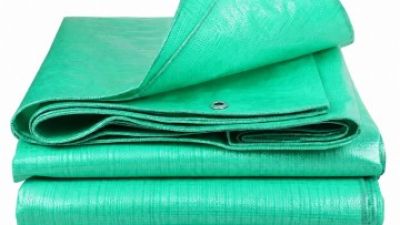
Choosing a Heavy-Duty Mint Green PE Tarpaulin for Outdoor, Agricultural, and Industrial Protection
Choosing a heavy-duty mint green PE tarpaulin starts with matching its specifications to the conditions it will face. Made from durable polyethylene, this tarp provides dependable waterproof coverage and resistance to tearing and UV exposure, helping protect equipment, materials, crops, and stored goods outdoors. Its mint green color offers a practical alternative to standard tarp shades while remaining suitable for a range of work and storage settings.
For agricultural use, it can cover supplies, harvested produce, or outdoor equipment. On construction and industrial sites, it helps shield materials from rain, sun, and dust, while its flexibility makes it useful for transportation, camping, and general storage. Available in customized sizes and weights from 50 to 300 GSM, the tarpaulin can be specified according to the required balance of coverage, strength, and handling convenience. Different packaging options support varied market and shipping needs. Professional manufacturing services can also include OEM and ODM customization, with worldwide shipping solutions available for buyers seeking a tarp tailored to their application.
Conclusion
Polyethylene Canvas is a versatile material made by weaving high-density polyethylene (HDPE) yarn into a scrim and applying a low-density polyethylene (LDPE) coating. Its weight, commonly expressed in GSM, and its mesh construction influence strength, flexibility, and suitability for uses such as covers, shelters, and agricultural or industrial protection. Manufacturing typically involves weaving, lamination, and reinforced edges, while performance comparisons may consider tensile testing under ISO 1421. For dimensional reference, one mil equals 25.4 μm.
This guide surveys the global market, major application areas, buyer regions, and trade factors, then compares ten manufacturers by product range and factory capabilities without focusing on brand promotion. Global buyers can use the checklist to assess GSM, mesh, UV-test documentation, minimum order quantities, and Incoterms. Clear specifications and comparable test data help buyers evaluate suppliers and select material suited to their required performance, order scale, and delivery arrangements.

 Wanggou Industrial Park,Lanshan District, Linyi City, Shandong Province, China